How Assisted Living Activities Are Tailored to Seniors With Limited Mobility
Staying active and socially connected is important at every stage of life. For older adults who experience limited mobility, however, traditional activities may sometimes feel difficult or exhausting. Walking long distances, standing for extended periods, or participating in fast-paced events can create barriers that make engagement harder.
Assisted living communities recognize this challenge. Activities are often thoughtfully planned so that every resident, including those with mobility limitations, can still participate, connect with others, and enjoy meaningful experiences throughout the day.
The goal is not simply to keep residents busy. It is to create opportunities for engagement that respect individual abilities while encouraging independence, confidence, and social connection.
When activities are carefully adapted, seniors with limited mobility can remain active participants in community life rather than observers.
Understanding Mobility Challenges in Older Adults
There are many reasons why people may develop mobility limitations. Arthritis, balance issues, muscle weakness, joint pain, or recovery from illness or surgery can hinder someone’s ability to move around easily.
Such challenges can render certain kinds of activities uncomfortable or unsafe. But limited mobility doesn’t mean a person stops wanting to stay involved, learn things, or socialize with others.
Assisted living communities know that engagement can’t be rigid. Activities are tailored to residents’ capabilities so they can partake comfortably and safely.
Communities make sure that anyone can enjoy valuable experiences by tailoring programs or activities to accommodate mobility levels.
Seated Activities That Encourage Participation
One of the most utilized methods that assisted living communities take to modify activities is providing seated options.
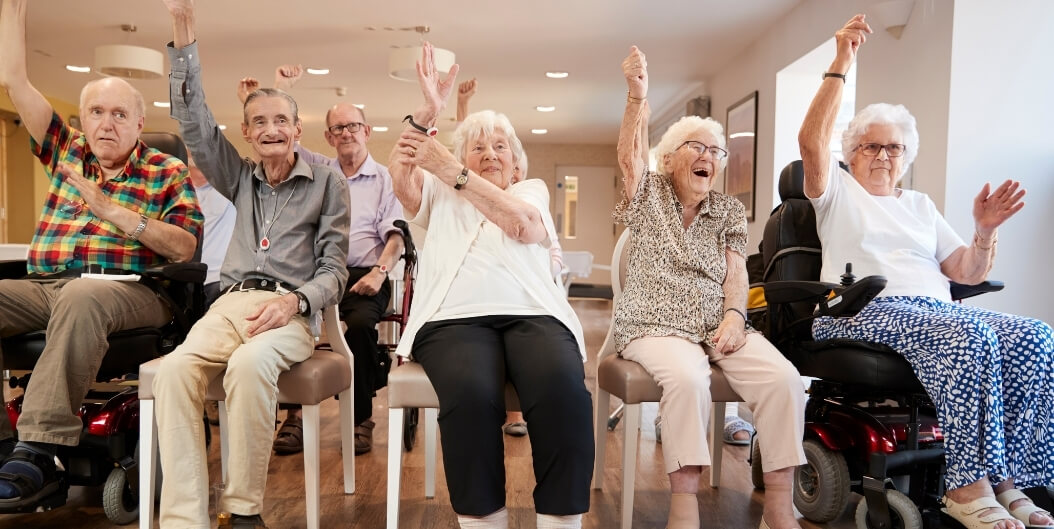
Seated programs give residents an opportunity to participate without having the need to be on their feet or walking for extended periods of time. These activities still offer mental stimulation, social interaction and light physical movement if appropriate.
Examples of seated activities often include:
- Chair-based fitness or stretching sessions
- Board games, card games, or puzzles
- Arts and crafts workshops
- Book clubs or discussion groups
For residents with limited mobility, seated programs help them stay comfortable yet social and active.
Many residents discover that these gatherings also open the door to friendships with neighbors who share similar interests.
Adaptive Exercise Programs
Exercise is still very important, even when you’re unable to move. Many assisted living communities feature exercise programs tailored to various physical capability levels.
Unlike traditional workouts that mainly consist of standing or very active movement, adaptive fitness programs centre on gentle movement and flexibility.
Residents may participate in activities such as chair yoga or light stretching, guided balance and flexibility exercises, low-impact strength training using resistance bands, and gentle movement classes designed for seated participants.
Such programs allow residents to maintain circulation, flexibility, and muscle strength, while lowering the risk of strain or injury.
Even simple movements can support overall physical health.
Social Activities That Require Minimal Movement
Being socially connected is as important as being physically active. As such, assisted living communities frequently develop social programs that make it easy for residents with mobility limitations to take part.
Most social activities are staged in cozy indoor areas where residents can relax when interacting with others.
Examples of these gatherings often include:
- Movie afternoons or music appreciation sessions
- Guest speakers and educational talks
- Small group storytelling or memory sharing sessions
- Celebrations for holidays or community milestones
Since these activities don’t require aggressive physical engagement, residents can participate in them regardless of mobility limitations.
These communal experiences can often leave residents feeling more connected to the community around them.
Creative Activities That Stimulate the Mind
Creativity is a great outlet for expression and engagement. Assisted living communities often have creative programs where residents can explore artistic interests without leaving their comfort zone.
Many creative activities are easily adapted for seated participation.
Residents may enjoy:
- Painting or drawing classes
- Craft projects such as knitting or decorating
- Writing groups or journaling sessions
- Music appreciation or sing-along events
These activities help residents concentrate on creativity rather than physical ability.
They also provide a comforting environment where residents can share stories and experience life together.
Accessible Community Spaces
Another important factor in activity participation is the physical layout of assisted living communities.
Many community spaces are designed with accessibility in mind. Wide paths, comfortable seating areas, and easy-to-navigate gathering rooms help make moving around safe for residents who get around using walkers or wheelchairs.
There are usually activity rooms arranged for participation, where residents do not feel crowded or rushed. Tables and chairs, and equipment are arranged in ways that everyone is included.
Accessible environments eliminate so many of the physical barriers that otherwise have the potential to prevent residents from participating in community events and activities.
Personalized Participation Options
Each resident has their own skills, preferences, and comfort levels. Many assisted living communities tailor activity options so residents can select the programs that work best for them.
Some residents may look forward to multiple group activities daily. Most might want a smaller group or maybe one on one engagement.
Activity coordinators and caregivers in the community often spend a lot of time working with residents to know what they like or not so much, and how active they can be physically. That enables them to recommend programs that seem fun, not overwhelming.”
Personalized engagement helps ensure that each resident finds meaningful ways to stay involved.
Encouraging Independence and Confidence
Participating in activities can play an important role in maintaining confidence.
When seniors with limited mobility discover activities that work for their abilities, they often find a sense of independence and achievement. Finishing a craft project, contributing to a discussion group, or engaging in an exercise session can strengthen feelings of competence.
These positive experiences help residents continue to play active roles in community life.
As residents gain more familiarity with things to do, many end up discovering supplementary activities over time.
Transportation and Assistance Support
There are times when the challenge isn’t even the activity itself, but simply getting to wherever it is carried out.
Assisted living communities typically offer assistance that allows residents to move safely between their apartments and activity spaces. Staff may provide guidance, help with mobility, or schedule transport around the community.
Such assistance helps ensure that residents with mobility limitations are able to attend events without feeling rushed or stressed.
Reducing logistical barriers enables more residents to attend social and recreational programs on a regular basis.
The Emotional Benefits of Staying Engaged
Mobility challenges can sometimes lead to feelings of isolation if activities are not adapted appropriately.
Residents can continue to feel connected when assisted living communities offer inclusive programming. Things like social interaction, shared laughter, and creative expression are all fundamental to emotional wellbeing.
Taking part in a group activity, even one where people are mostly silent, helps residents remember they’re still viable members of their community.
These moments of connection are often some of the highlights of the day.
Ready to Experience a Community Designed for Every Mobility Level? Consider Scheduling a Tour of Elison Assisted Living of Graham
If you are exploring assisted living options and want a community that supports engagement for residents of all mobility levels, visiting in person can provide valuable insight.
At Elison Assisted Living of Graham, residents have access to thoughtfully designed activities, accessible community spaces, and supportive staff who help ensure everyone can participate comfortably. Programs are created to encourage social connection, creativity, and gentle physical activity while respecting individual abilities.
The goal is simple. Help residents stay engaged, connected, and confident in their daily lives.
Schedule a tour of Elison Assisted Living of Graham to learn how assisted living can provide a welcoming environment where residents with limited mobility can still enjoy meaningful activities and an active community lifestyle.